
Last updated November 21, 2026
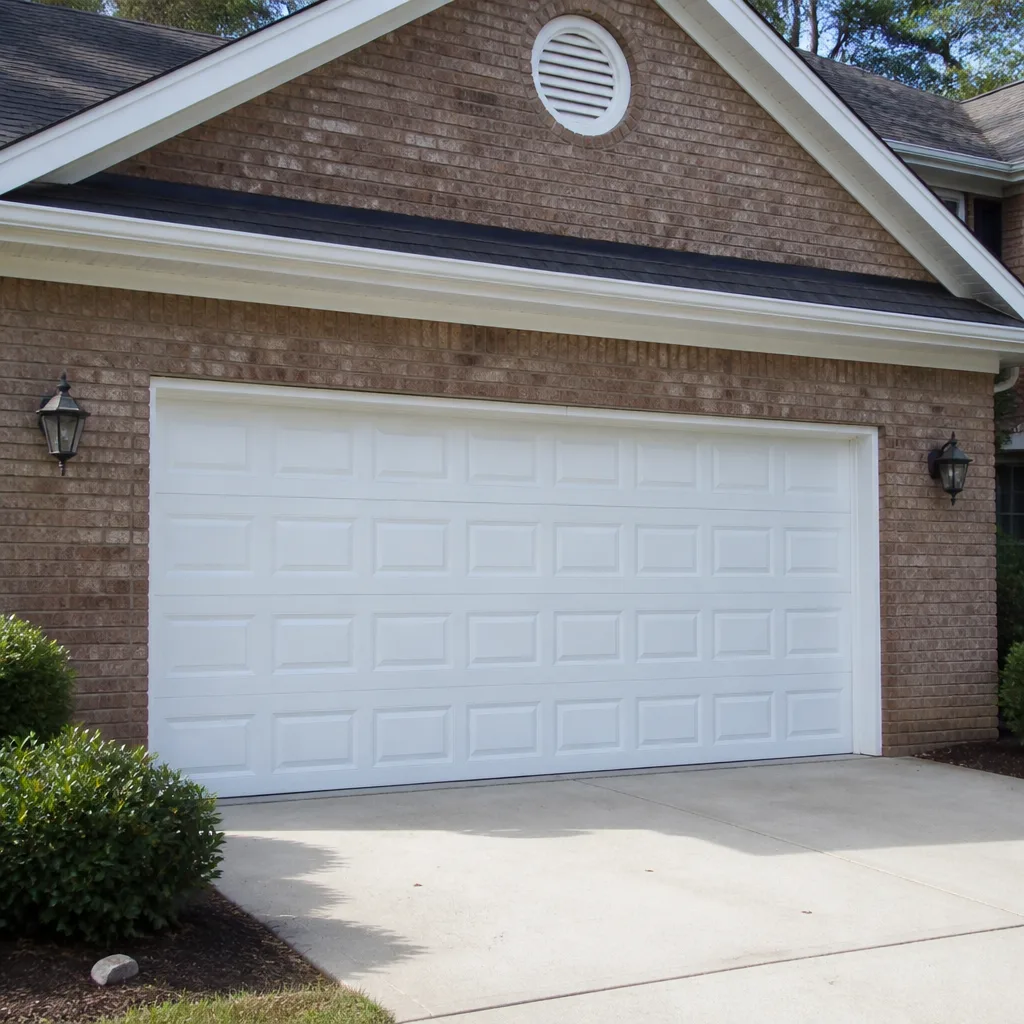 Raised-panel steel
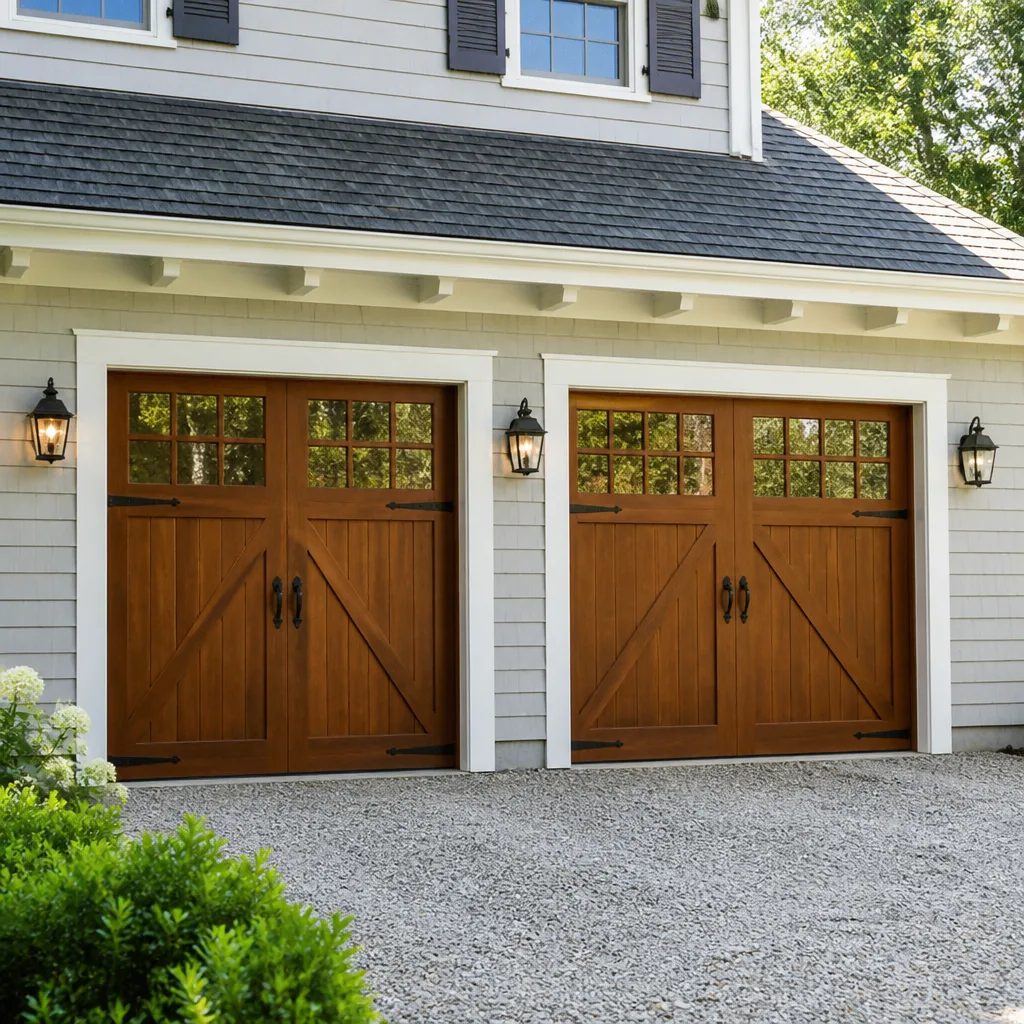 Carriage house
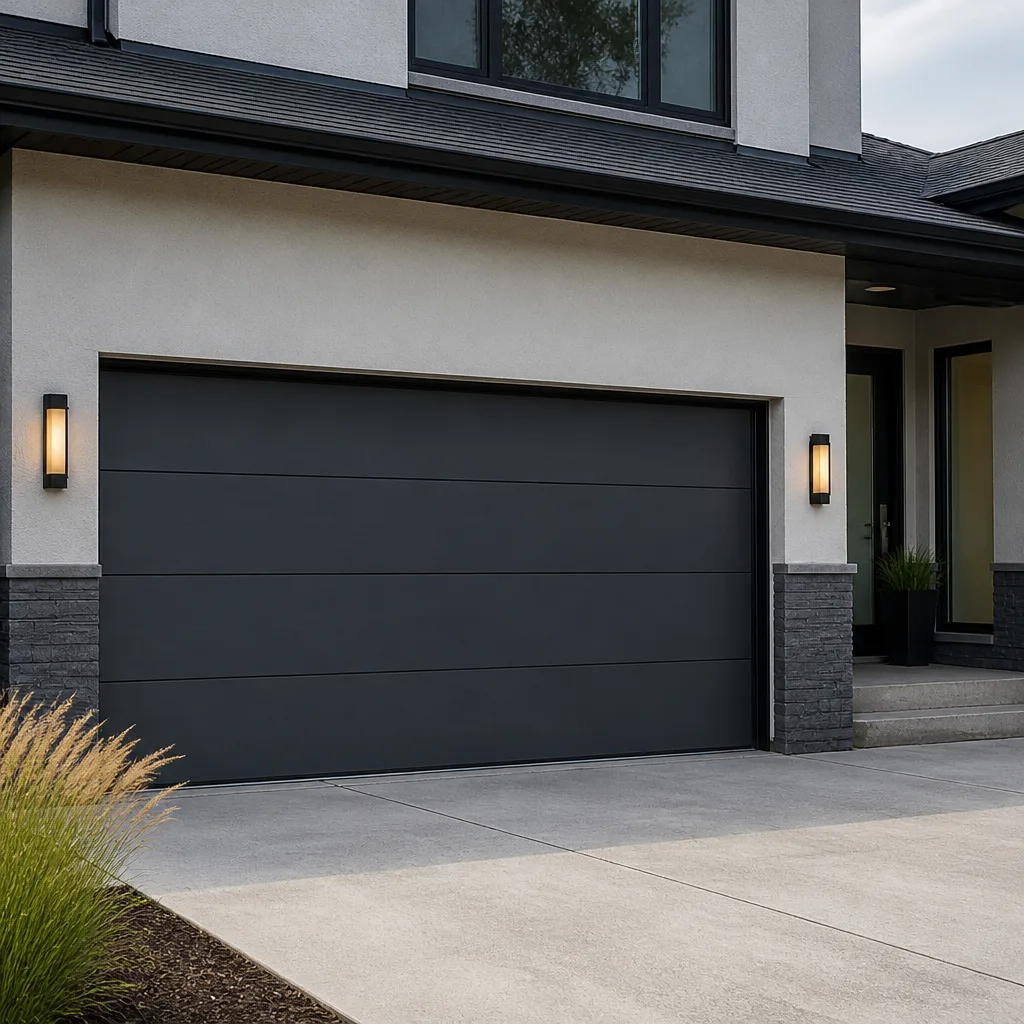 Modern flush
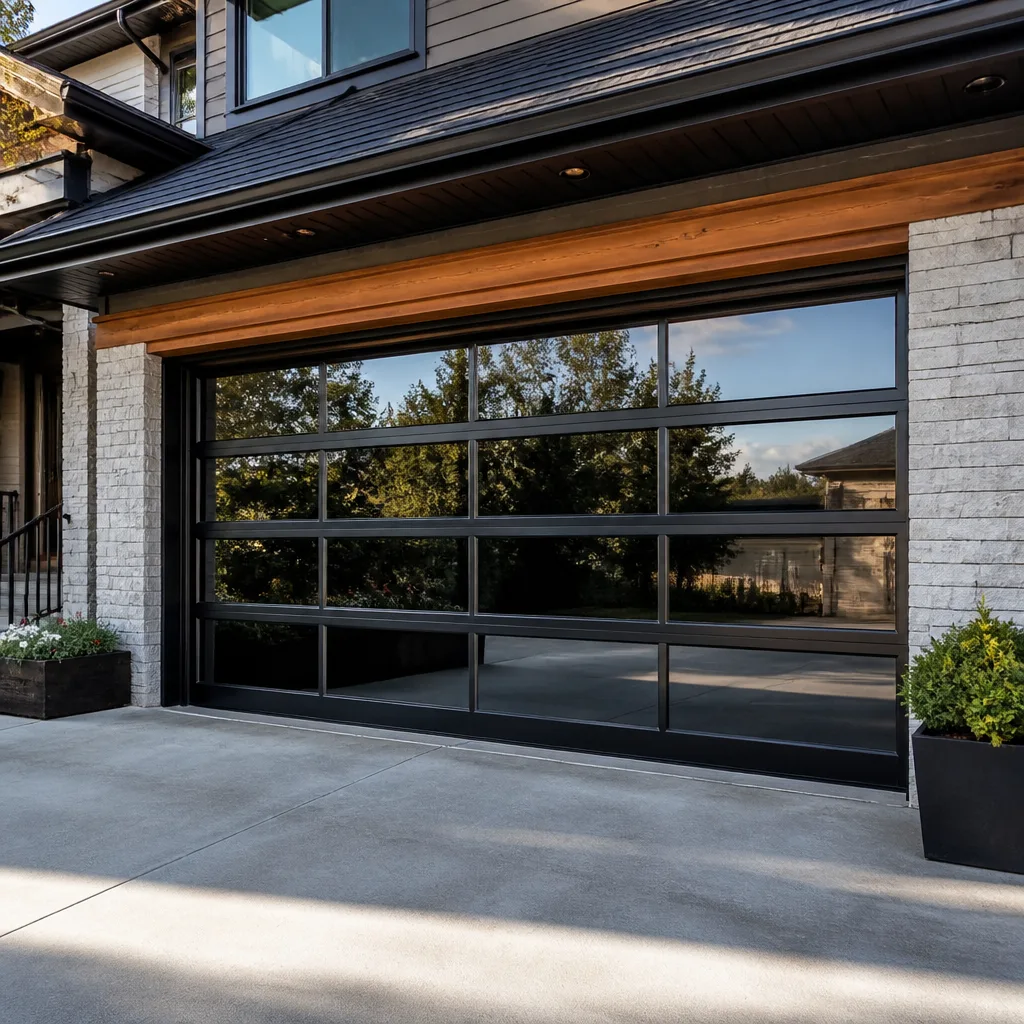 Full-view glass
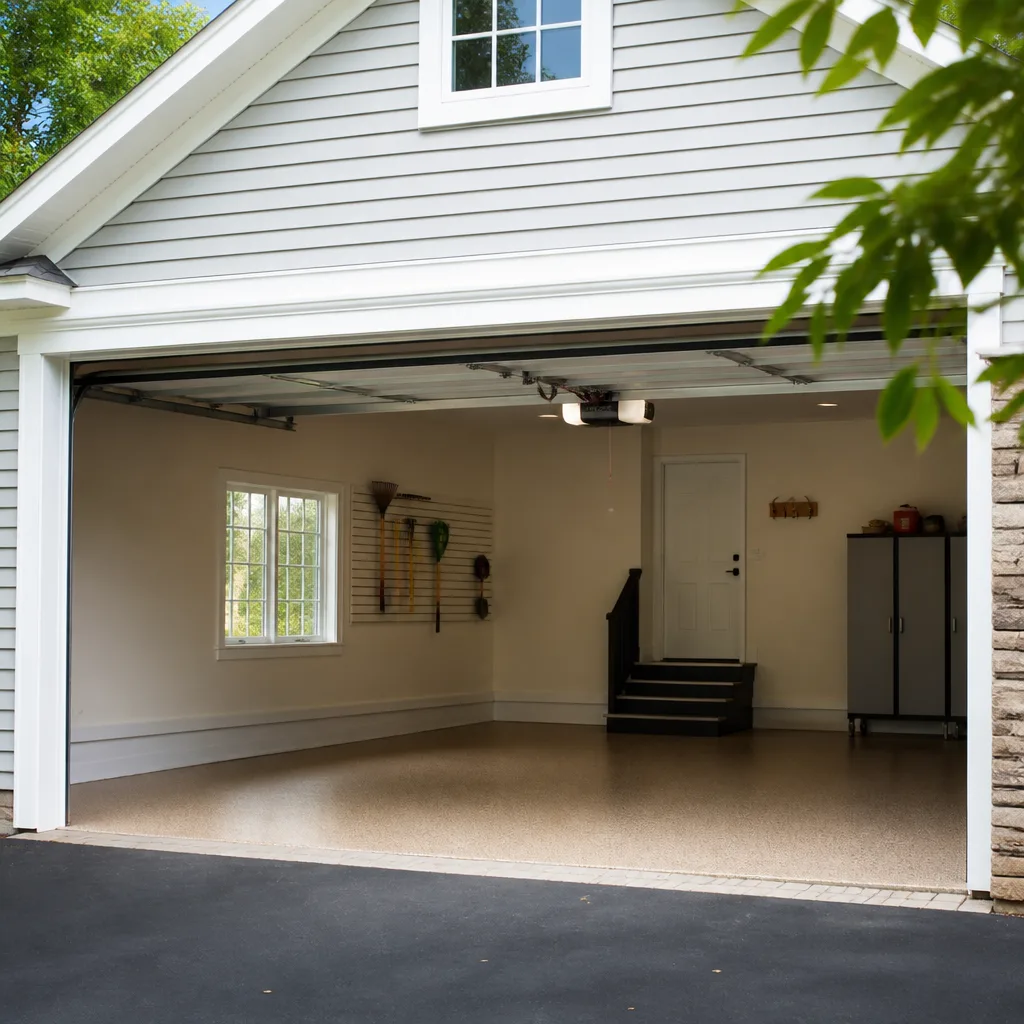 LiftMaster openers
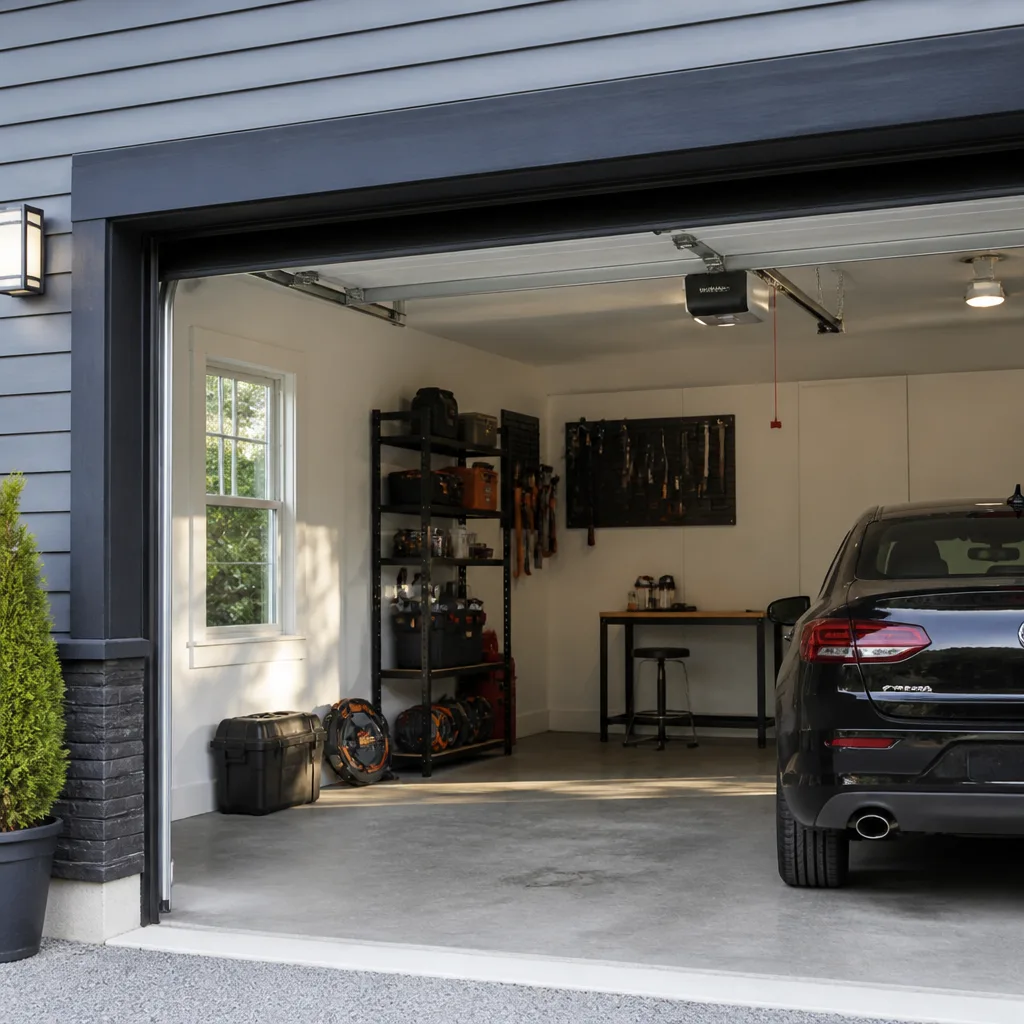 Chamberlain openers
Full 25-point door and opener safety check with every visit - springs, cables, rollers, tracks, and your LiftMaster or Chamberlain opener included
You get a price before we start. It does not change when the pro arrives.
Get your free estimateGarage Door Warning Signs: A Middletown Township Homeowner’s Reference Guide
A grinding noise and a scraping noise can sound almost identical from inside the house, but they point to entirely different failures. One is usually a worn gear inside the opener motor; the other is often a track obstruction that can bend a panel mid-cycle or knock the door off its rollers. Homeowners in Middletown Township hear these sounds every week and, without a reference point, treat them as the same problem – or ignore them until the door stops moving altogether. This guide translates the specific sounds, movements, and visual cues a garage door gives off into plain-language diagnoses, so you can tell a technician exactly what’s wrong and judge whether it’s a same-week fix or a stop-using-the-door situation.
Quick Answer
Most garage door failures announce themselves first through sound changes, uneven movement, or visible wear on springs and cables, and the single most urgent sign is a visible gap in a torsion spring – stop using the door immediately if you see one. Frayed cables, a door that reverses unexpectedly, and a door that bounces hard at the floor are the next tier up and should be scheduled within days. Squealing, mild grinding, and light rust fall into a watch-and-maintain category you can track over a few weeks.
Styles & brands we work with
- Raised-panel steel
- Carriage house
- Modern flush
- Full-view glass
- LiftMaster openers
- Chamberlain openers
Table of Contents
- Sound-Based Diagnosis: What Grinding, Scraping, and Popping Actually Mean
- Visual Warning Signs Ranked by Urgency
- Movement Symptoms: What Slow, Uneven, or Bouncing Tells You
- Local Warning Signs That Inland Guides Skip
- The Three-Tier Urgency Framework
- Why Spring Warning Signs Are in a Class of Their Own
- Opener Symptoms Versus Door Symptoms
- Common Mistakes to Avoid
- When to Call a Professional
- Frequently Asked Questions
Sound-Based Diagnosis: What Grinding, Scraping, and Popping Actually Mean
Sound is the most reliable early warning system a garage door has, but only if you know what each noise is telling you. While every door sounds a little different, the categories below cover most of what our technicians encounter on Middletown Township calls, and the distinction between a torsion spring system and a belt or chain drive opener matters at every step.
Grinding. A steady, low grind that starts the moment the opener engages usually comes from the opener itself, not the door. On a belt or chain drive, the culprit is often a worn drive gear, a dry rail, or a chain that’s no longer tensioned correctly. If the grind only appears as the door travels, look instead at the rollers and the track. Recognizing this early can turn a full opener replacement into a straightforward garage door opener repair.
Scraping. A scraping sound means metal is contacting metal where it shouldn’t. The common causes are a bent track section, a roller that’s popped out of its track, or a panel that’s slightly out of alignment. Scraping is more urgent than grinding because a track that lets one roller escape can let every roller escape, and a door that comes off its track at speed can drop a panel. Stop the cycle, inspect the track by eye, and don’t cycle the door again until someone has looked at it.
Popping. A loud pop or snap, especially right as the door begins to lift or right as it settles, points toward the torsion spring or the cable tension. In the torsion spring system, a pop is either the spring winding on its shaft or, worse, a spring that has just failed. This is the sound that most often precedes a full spring break, and it’s a reason to stop and take the door out of service pending an inspection.
Clicking. Usually benign – a relay in the opener or a limit switch cycling – but if the clicking is accompanied by a door that doesn’t move, the problem is in the opener’s control side rather than the door itself.
Squealing. Dry rollers, a dry torsion shaft, or a worn bearing plate. Squealing is the least urgent of these sounds in most cases, but it’s also the easiest to resolve, and staying ahead of it slows wear on the moving parts around it.
Visual Warning Signs Ranked by Urgency
Sound grabs your attention; sight tells you whether the problem is cosmetic or critical. Run through the list below any time the door is open or closing, ideally with a flashlight and from a safe distance on the ground – never stand under a moving door or try to inspect a spring system while it’s under tension.
- Visible gap in a torsion spring (stop use now). A torsion spring is a coiled steel spring that stores tension. If you see a section missing, an obvious split, or the spring hanging loose with a two-inch gap between coils, it has failed. That spring is holding back hundreds of pounds of door weight, and the door is currently held up by the opener or by luck. Stop using the door and call for professional repair.
- Frayed or broken cable (urgent). The cables run from the bottom brackets up to the drums above. Any sign of fraying, a frayed end poking out of the drum, a cable that’s off its groove, or a cable that’s visibly slack means the door is not balanced and could come down hard. Don’t operate it.
- Bent track section (urgent). Tracks should have straight runs and even curves. A visible kink, a dented section, or a gap where a track has separated from its mounting can let a roller depart at any moment.
- Rollers out of their tracks (urgent). Look at the edges of the door where the rollers ride. A roller sitting outside the track instead of inside it means the door is being held in alignment by force rather than by design.
- Rust on moving parts (schedule). Light surface rust on paint or the bottom of a panel is cosmetic. Rust around the drum, bottom bracket, hinges, or rollers is structural and means those parts are losing strength or seizing up.
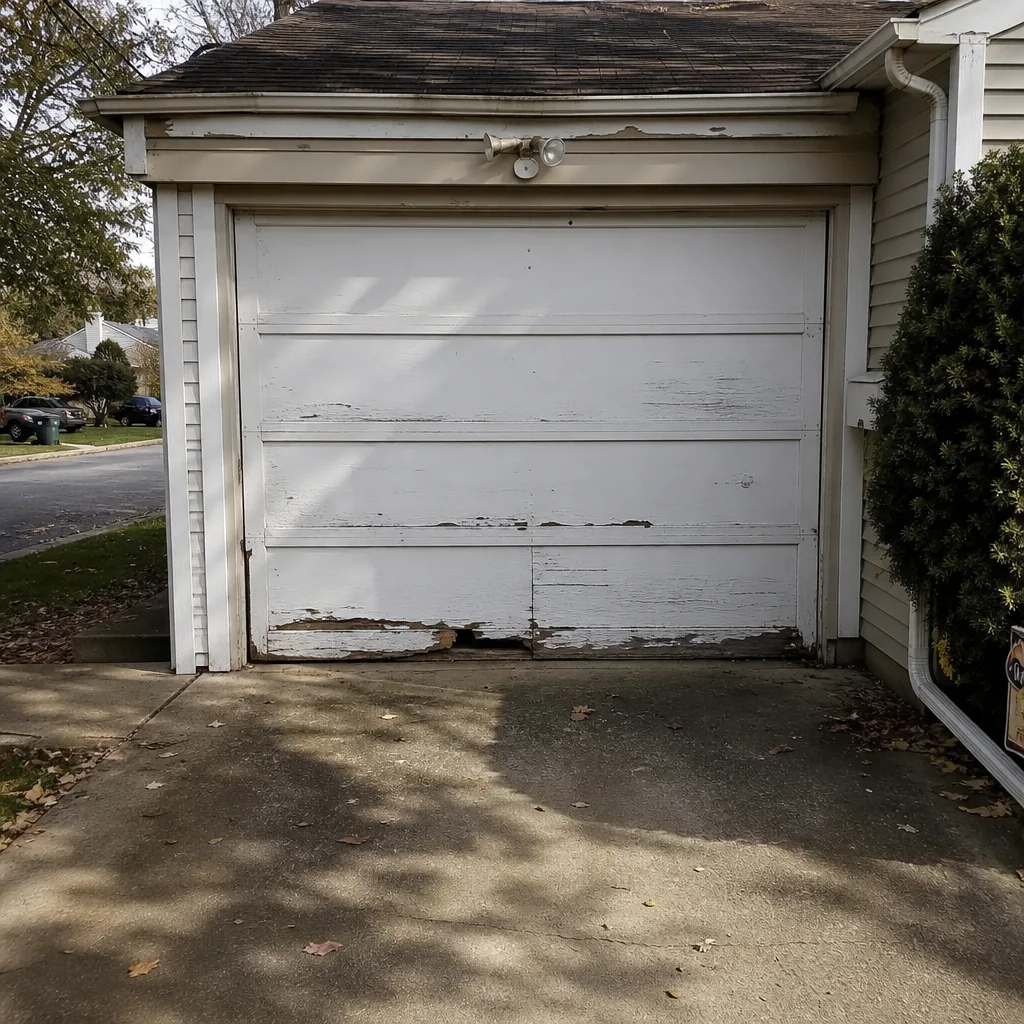
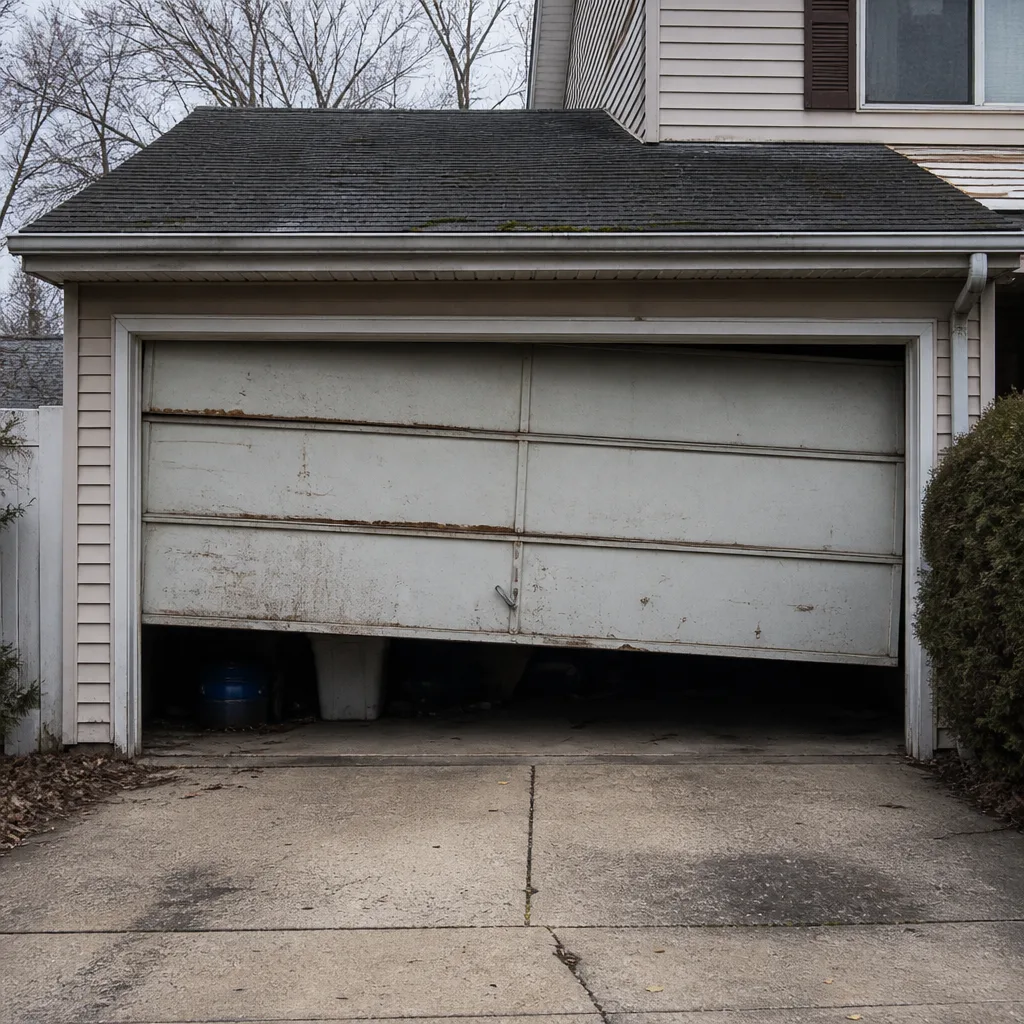
- Sagging panels or a bowed bottom section (schedule). A door that looks like it’s leaning or a bottom section that’s curving outward has usually been pushed or hit. The panel’s structural integrity is compromised even if the door still moves.
- Loose or missing hinges and fasteners (watch). Hinges and brackets held by one screw instead of all of them will eventually work loose and shift the panel alignment.
Movement Symptoms: What Slow, Uneven, or Bouncing Tells You
Watch the door for a full open-and-close cycle once a month. Movement tells you as much as sound does, and it’s often the fastest way to distinguish a cable and balance issue from an opener issue. Stand well clear and out of the path of travel.
The door opens slower on one side than the other. This is almost always a cable balance problem, a slipping drum, or a torsion spring that’s lost some of its tension. If the door is visibly cocking to one side, stop and inspect. If you keep running it, the door loads unevenly onto the opener, and the opener’s job becomes pulling a door it can’t balance – which wears out the opener too.
The door bounces hard at the bottom. A door that hits the floor and rebounds two or three times is telling you the spring tension is wrong or the opener’s force setting is too high. A single soft settle is normal; a bouncy landing is not, because it means the door is effectively falling the last few inches and relying on the opener to catch it.
The door reverses unexpectedly on the way down. Either the safety sensors have an obstruction, or the opener’s force calibration is out of adjustment. A reversing door is a safety feature doing its job – it’s telling you the opener thinks it struck something. Don’t override it. Have a technician check whether the door has a tight spot or a track obstruction the opener is interpreting as a collision.
The door won’t open at all, or opens only a few inches. Often this points to a spring failure – the opener lifts a door whose springs are no longer doing their job, trips its force limit, and gives up. Continuing to press the button on a failed-spring door strains the opener motor and gear, sometimes fatally.
Local Warning Signs That Inland Guides Skip
Middletown Township’s mix of older development and newer construction near the waterways means homeowners are dealing with two distinct sets of environmental conditions – and the warnings that matter differ depending on which side of town you’re in. A guide written for a dry inland climate will miss these entirely.
Salt-pitting on hardware. The neighborhoods closest to the bay and the river tend to see accelerated corrosion on hinges, brackets, and the bottom corners of steel doors. When hardware starts showing tiny pitted white or reddish spots – not a smooth coat of surface rust, but roughened pits – it’s a sign that salt is eating into the metal rather than just sitting on the paint. That’s not cosmetic. Pitted hinges and brackets lose strength, which matters most on the bottom brackets that anchor the cables. A thorough garage door repair visit will include a look at those components for exactly this reason.
Accelerated cable fraying near the drum. Cables on Middletown Township doors that live close to the weather fail faster than indoor protected cables do because moisture cycles – morning fog, afternoon sun – repeatedly dry and rewet the cable strands. Fraying typically starts right where the cable winds onto the drum. Inspect that drum area every couple of months, and call for service the moment you see individual strands separating.
Seized rollers and stiff hinges after a wet stretch. Any season with prolonged moisture leaves untreated steel rollers and hinges feeling gritty. That friction raises the load the opener has to pull, and over time it shows up as slower travel and a hotter motor.
Sagging wood panels from age and moisture. Older wood doors that get more sun and rain than shade tend to sag at the center of their panels. Sagging changes the door’s balance, and a formerly well-tuned opener starts to fight it.
Note on hail. Hail is uncommon in Middletown Township and shouldn’t be treated as a routine damage threat. When impact or storm damage does happen, the concern is usually a bent panel or a knocked track, not widespread hail damage.
The Three-Tier Urgency Framework
Every warning sign on this page fits into one of three categories. Use the framework below to make a proportionate decision – over-reacting wastes a service call, under-reacting can cost you a door or put someone at risk.
Tier 1 – Stop using the door now.
- Visible gap or break in a torsion spring
- Frayed, broken, or slack cable
- Door visibly off its track or a roller popped out
- A loud pop or snap accompanied by the door failing to hold its weight
- Door hanging open without assistance after the opener is disengaged
These are the conditions where a trained professional should be the only person to touch the door. Call us right away – we answer 24/7. Fast dispatch from 7am to 7pm, Sunday through Friday.
Tier 2 – Schedule this week.
- Consistent grinding or squealing
- Door opens slower on one side or bounces hard at the floor
- Opener reverses unexpectedly (after checking sensors for dirt)
- Rust on drums, bottom brackets, or hinges
- Bent track or a bottom section that’s been pushed or struck
These should be repaired sooner rather than later. The door still operates, but parts are being stressed in ways that accelerate wear, and the repair bill usually grows if you wait.
Tier 3 – Watch and maintain.
- Light surface rust on painted panels
- Dry-sounding rollers or hinges
- Single loose fastener on a hinge
- Small track scuffs with no visible deformation
These are the items to note in a running list and address at your next service visit or when another item pushes you into one.
Why Spring Warning Signs Are in a Class of Their Own
A torsion spring holds the entire weight of the door. When one fails, the door can drop hard and fast, and the failure is violent. That’s why spring warning signs sit at the top of the urgency framework and why they deserve a section to themselves. A trained professional can also lose fingers or worse if a spring is mishandled, so please don’t treat winding or replacing a spring as a homeowner project.
Watch for these spring signals:
- A visible gap between spring coils where there was once continuous steel
- A spring that’s visibly loose or has slid sideways on its shaft
- Loud popping or snapping during door travel
- A door that feels very heavy when the opener is disengaged (this is the clearest non-visual sign that spring tension is gone)
- Rubbing marks or flakes of rust around the spring’s mounting plate
The right approach for anything in this section is professional inspection, not a home fix. Our technicians have up to 10 years of experience handling torsion spring systems across all the major industry brands, and dedicated garage door spring repair is one of the services we focus on because it’s the one that most often goes wrong in the wrong hands. We also won’t take shortcuts here – we’ll tell you exactly what we found and what it takes to make it right.
Opener Symptoms Versus Door Symptoms
A lot of homeowners pay for opener work when the real problem is mechanical, or the reverse. Distinguishing opener symptoms from door symptoms saves money and time and gets the right part replaced once. The clearest way to separate them is to disengage the opener – the manual release cord on the rail – and lift the door by hand.
- Disengage the opener (safe, no tools required). Pull the release cord so the opener no longer engages the door.
- Lift the door halfway by hand. If it’s noticeably heavy, it’s a spring or balance issue, not an opener issue.
- Let go at the halfway point. The door should hold roughly in place. If it slides down, the springs and cables aren’t doing their job.
- Re-engage the opener with the door closed and cycle it. Watch and listen. If the noise is gone, the door was the problem. If it remains, the opener is.
Common opener-only symptoms include clicking without movement, a fob or wall button that only works intermittently, the opener motor running but the door staying put, and a constant single flash of the safety LED. These are electronics and control issues rather than structural ones. Because we work on LiftMaster, Chamberlain, Genie, Craftsman, Raynor, Amarr, Wayne Dalton, and Clopay equipment, our technicians arrive already familiar with the specific boards, gears, and drive systems your opener uses.
Common Mistakes to Avoid
- Running the door on a suspected broken spring. Each cycle drives the opener motor against a load it wasn’t designed to lift. In Middletown Township, spring failure is what turns into a much bigger repair when it’s ridden out for a few days. Stop pressing the button.
- Using the opener’s force adjustment to hide a mechanical problem. Turning up the force setting so the door will close over a stiff spot masks the real problem and removes the safety margin. Fix the cause, not the symptom.
- Spraying springs and cables with lubricant to stop a noise. Only the moving parts – hinges, rollers, and the torsion shaft – take lubricant as part of ordinary maintenance. Springs and cables are under tension and should be left to a professional, not treated with solvent.
- Ignoring a single reversing door incident. One unexpected reversal is a safety sensor trip. Three in a row is a real problem, and continuing to cycle it hides the cause.
- Assuming the same warning signs mean the same thing for every door. A grind on a belt drive opener is a different problem than a grind on a chain drive. Diagnosing by brand and drive type is part of the job and the reason the door on your neighbor’s house may not fail the way yours will.
- Overlooking the drum and bottom brackets when inspecting a Middletown Township door near the bay. Homeowners tend to inspect the middle panels where they can see rust easily, but the failure points live at the corners and the drum.
- Treating the opener as the first suspect. The mechanical side of the door fails more often than the electronics. Start your diagnosis at the door and work outward.
When to Call a Professional
Call for professional service if any of the following apply: you see or suspect a broken torsion spring, a frayed or slack cable, a door off its track, a door that won’t hold its own weight, or an opener that won’t move the door at all. Call sooner than later – the difference between a straightforward repair and a door replacement often comes down to days, not weeks, of delay.
Garage door work involves stored mechanical energy that’s not safe to work around without proper training and tools. Our technicians have up to 10 years of experience diagnosing what the sound, sight, and movement symptoms on your door actually mean for your specific spring system, track configuration, and opener brand. We work on Middletown Garage Door Repair Co equipment from LiftMaster, Chamberlain, Genie, Clopay, Amarr, Wayne Dalton, Craftsman, and Raynor, so whoever installed your door or opener, we’ll know the hardware. Middletown Garage Door Repair Co offers free estimates in Middletown Township – call (855) 901-9068. We answer 24/7. Fast dispatch from 7am to 7pm, Sunday through Friday.
Frequently Asked Questions
The earliest signs are almost always a change in sound (a new grind, squeal, or scrape) and a slowdown in movement. Most homeowners notice a new noise weeks before anything stops working – treating that noise as a warning rather than a background annoyance is what saves on repair bills.
No. A broken torsion spring removes the support that holds the entire weight of the door, so the door is effectively relying on the opener or on luck to stay up. Stop using the door and call for professional repair the same day – Call (855) 901-9068. We answer 24/7. Fast dispatch from 7am to 7pm, Sunday through Friday.
A door that reverses on the way down has either tripped its safety sensor (dust, an obstruction, or misalignment) or is hitting a mechanical tight spot the opener interprets as a collision. Clean the sensor lenses first, and if the problem persists, schedule a repair.
Surface rust on the painted panel is cosmetic, but rust on drums, bottom brackets, hinges, or rollers means those parts are losing strength or seizing and should be inspected. On Middletown Township doors close to the bay, salt-pitting on hardware is a specific sign to watch, since salt accelerates corrosion in a way plain humidity does not.
Yes, in two ways: doors near the water see earlier salt corrosion and faster cable fraying at the drum, and doors in older inland neighborhoods tend to show wood-panel sagging and stiff hinges after wet stretches. Both are worth scanning for every couple of months.
A grind that starts as the opener engages usually points to the opener itself (a worn drive gear or dry rail), while a grind that appears mid-travel usually points to rollers or the track. That distinction matters because one is an opener repair and the other is a mechanical repair on the door. Call (855) 901-9068 for an exact diagnosis – estimates are free.
The Bottom Line
Garage door failures rarely happen without warning. A new grind, a pop during travel, a visible gap in a spring, a bounce at the floor, or salt-pitting on the brackets each point at a specific issue – and once you can tell them apart, you can decide quickly whether you’re looking at a stop-using-the-door-now situation or a schedule-this-week situation. Use the three-tier framework, keep an eye on the drum and bottom corners, and treat every sound that’s new as worth a look. The door is doing everything it can to warn you before it fails.
Written by the team at Middletown Garage Door Repair Co.
See the difference
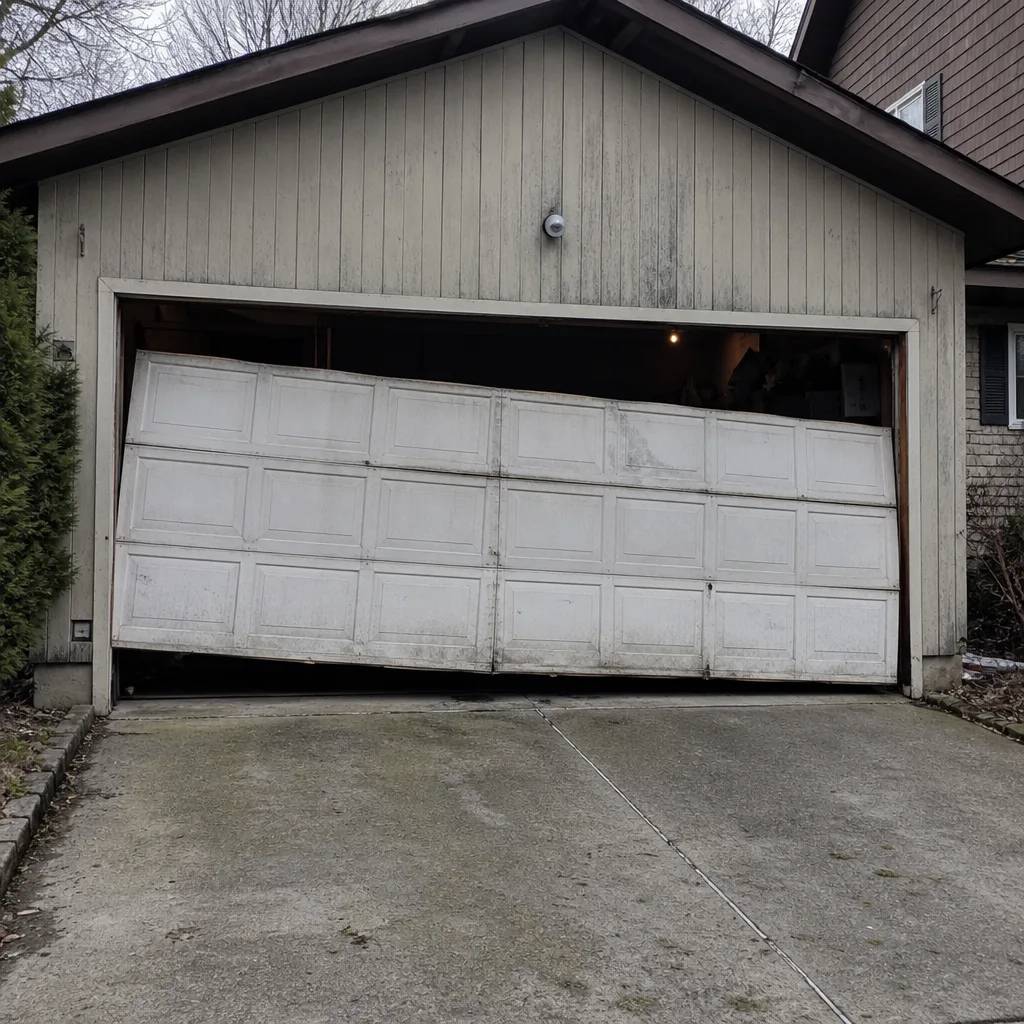 Before
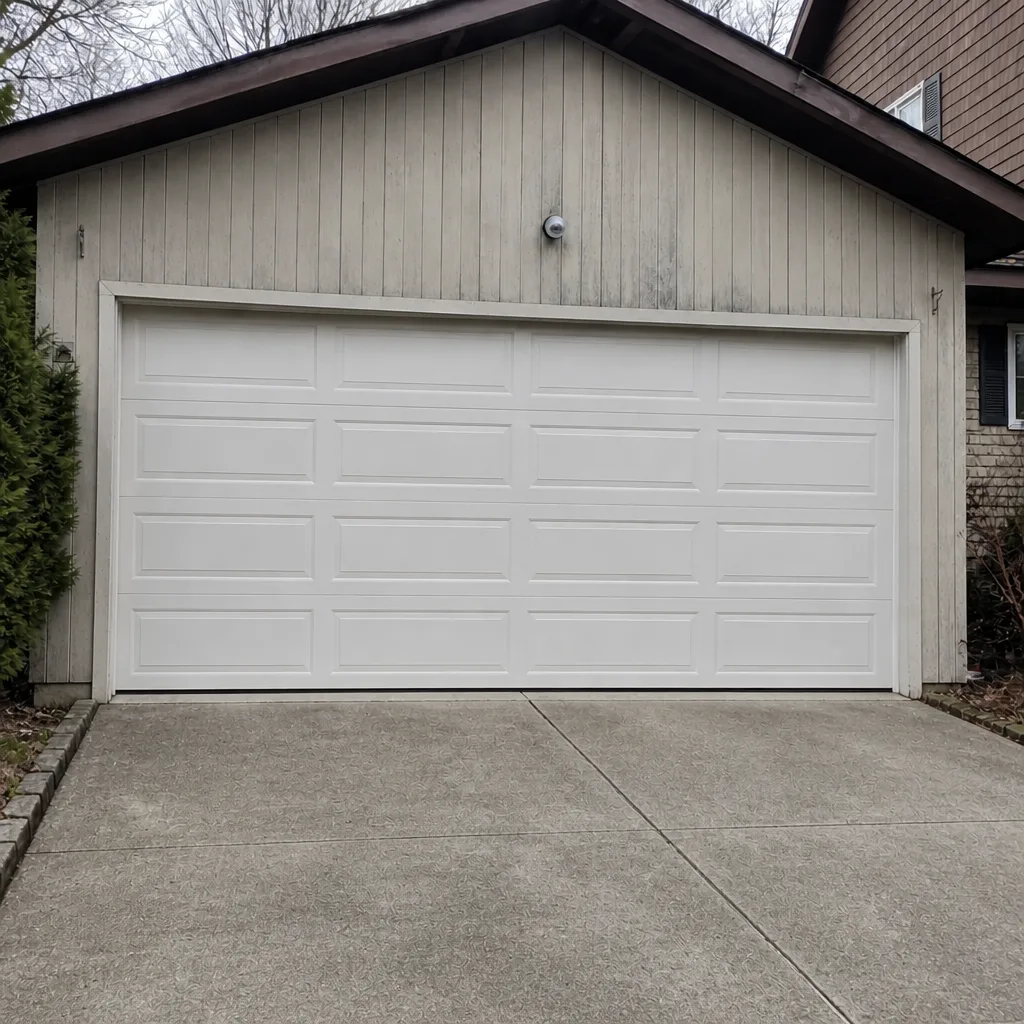 After
 Before
 After
 Before
 After